
COLD BREW VS ICED COFFEE
Cold brew vs iced coffee: caffeine, taste and brewing compared
They may look alike over ice, but they are brewed differently. Learn how cold brew, iced coffee and iced Americanos differ—and why the name alone cannot predict caffeine.
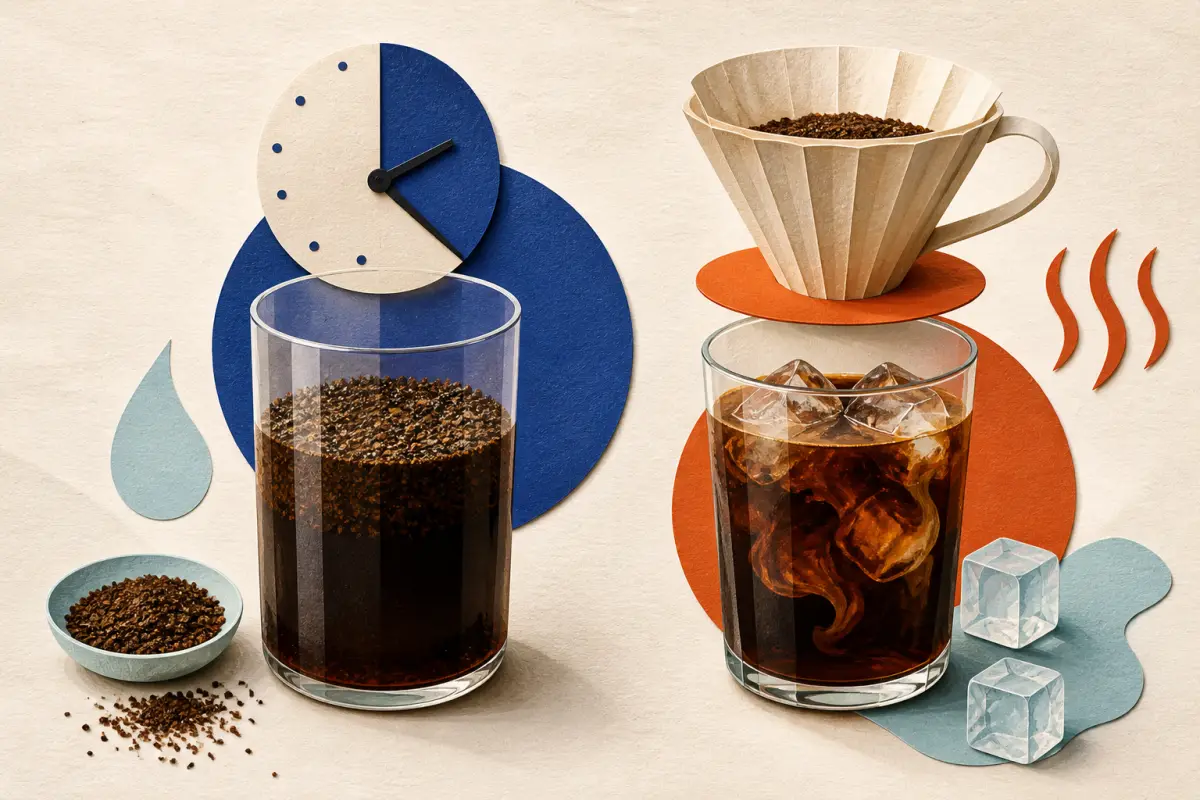
1. The answer: cold brew is not always higher in caffeine
Cold brew can contain more or less caffeine than iced coffee. Coffee-to-water ratio, whether concentrate is diluted, finished serving size and the brand recipe determine the answer. Cold brew names a method, not a fixed dose.
Iced coffee is generally brewed hot and then chilled or poured over ice. Melting ice changes concentration, but it does not remove caffeine already extracted if you drink the whole beverage.
2. How cold brew, iced coffee and iced Americano are made
Cold brew steeps coarse coffee in cool water for a long time. Starbucks describes its store cold brew as steeped for 20 hours; other recipes commonly use roughly 12–24 hours.
Iced coffee is hot-brewed coffee served over ice, sometimes brewed stronger to allow for dilution. An iced Americano combines espresso shots, cold water and ice, so its caffeine mainly follows the shot count.
Three cold coffee methods
| Cold brew | Long cold-water steep | Depends on ratio and dilution |
| Iced coffee | Hot brewed, then iced | Depends on brew strength and size |
| Iced Americano | Espresso + water + ice | Mostly follows shot count |
3. Why they taste different
Hot water quickly extracts aromatic acids and other soluble compounds, often giving iced coffee a brighter profile. Long cold extraction is commonly smoother, rounder and less bitter.
Smooth taste does not mean low caffeine, and intense taste is not a milligram meter. Bean species, dose, grind and recipe can separate perceived strength from total caffeine.
4. How concentrate and dilution change caffeine
Home cold brew is often prepared as concentrate and diluted with water or milk. Tracking the concentrate value as if it described the finished cup—or forgetting how much concentrate was used—creates a large error.
Compare total milligrams in the drink as served. Confirm concentrate volume and dilution first; remember that a glass full of ice does not contain the same volume of coffee as the glass size.
5. A real product example
Starbucks currently lists about 205 mg in a Grande 16 fl oz Cold Brew in the US and notes that caffeine is approximate and customization changes nutrition. That is a product-specific example, not a universal cold-brew value.
The FDA gives 113–247 mg as a typical range for 12 fl oz of regular brewed non-specialty coffee. That wide range is exactly why the drink name cannot settle the comparison.
6. How to compare and track accurately
Use official nutrition data first. Record the full product, size, concentrate or ready-to-drink status, dilution and milligrams. When no official value exists, use a range and label it as an estimate.
To reduce caffeine, choose a smaller serving, less concentrate or fewer shots, greater dilution, or decaf. The FDA cites 400 mg per day as a general reference for most healthy adults, while sensitivity and individual circumstances vary.
TAKEAWAY
A brewing name is not a caffeine measurement
Compare the exact brand, size, recipe and total milligrams in the finished drink. Cold brew often tastes smoother, but that does not make it predictably lower or higher.
References
- Starbucks — Cold Brew nutrition
- Starbucks Coffee Science — Iced Americano, cold brew or iced coffee
- U.S. FDA — Spilling the Beans: How Much Caffeine Is Too Much?
General education only. Caffeine varies by product and preparation; prioritize official brand data. This is not medical advice.