
CHOCOLATE & CAFFEINE
How much caffeine is in chocolate? Dark, milk and cocoa compared
Chocolate contains caffeine, usually much less than coffee. Cocoa percentage, serving size and recipe determine the total—and caffeine is not the same as the more abundant theobromine.
1. Quick answer: darker usually means more caffeine
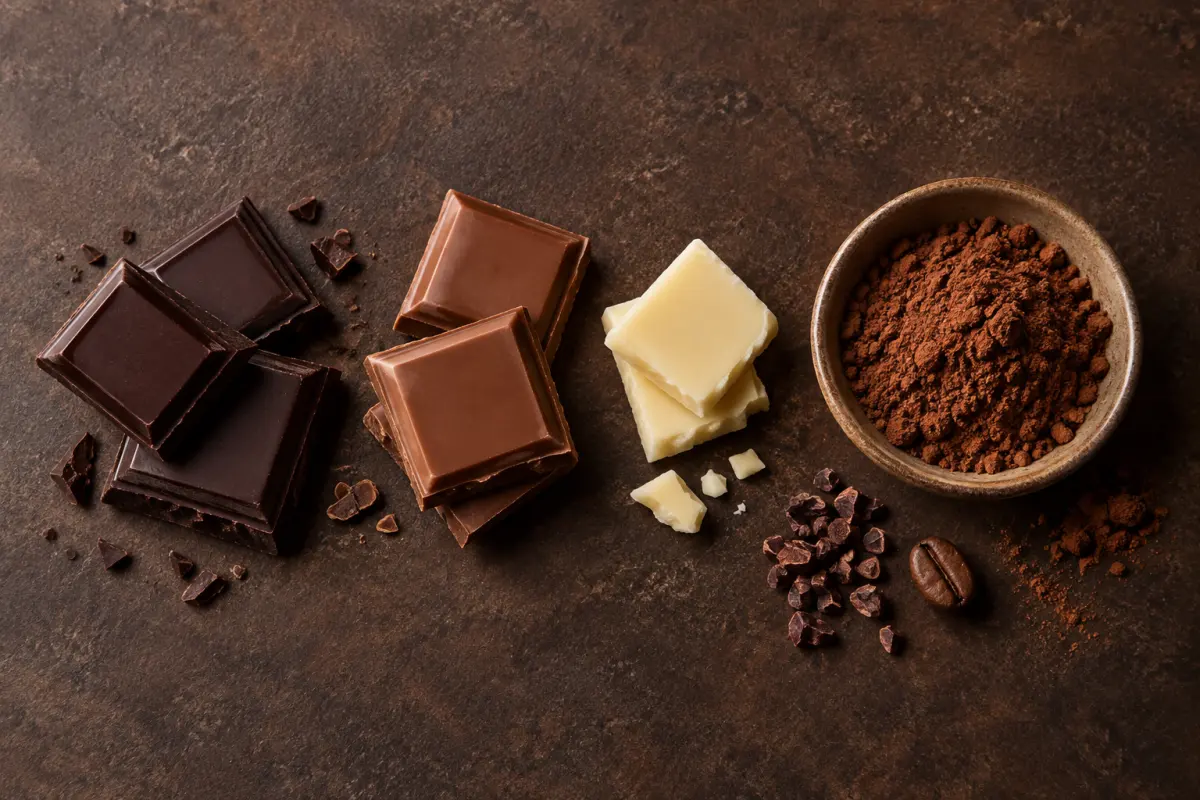
Dark chocolate generally contains more cocoa solids and therefore more caffeine than milk chocolate. White chocolate is made mainly with cocoa butter rather than cocoa solids and usually contains virtually no natural caffeine, unless coffee, tea or added caffeine is included.
A small serving is normally far below a cup of coffee, but servings add up. It can still matter for sensitive people, children, pregnancy or late-evening eating.
2. Caffeine in common chocolate products
Typical USDA FoodData Central values put a 28 g serving of 70%–85% dark chocolate at about 23 mg of caffeine and the same weight of milk chocolate at about 6 mg. Natural unsweetened cocoa powder contains roughly 230 mg per 100 g, or about 10–12 mg per level tablespoon. White chocolate is generally near 0 mg.
These are category estimates, not promises for every brand. A drink, cake, ice cream or protein bar may contain an unknown amount of cocoa or chocolate.
3. Why amounts vary
More cocoa solids generally means more caffeine; cocoa butter itself is not the main source. Sugar, milk powder, nuts and fillings dilute cocoa solids by weight.
Origin, variety, processing and laboratory measurement also create variation. A 70% cacao label suggests direction but does not reveal an exact caffeine value.
4. Caffeine and theobromine are different
The principal methylxanthine in cocoa is theobromine, with caffeine present in a smaller amount. They are related but not interchangeable, and theobromine tends to feel milder.
Do not add theobromine to the caffeine milligrams in your tracker. Sugar, portion size, sensitivity and both compounds may shape how chocolate feels.
5. Can chocolate disrupt sleep?
For most adults, caffeine in a small chocolate serving is modest. Sensitive people may still notice sleep effects, especially when dark chocolate is combined with coffee, tea or cola later in the day.
If the pattern repeats, try an earlier time, a smaller portion or white chocolate and log sleep for one to two weeks.
6. How to log chocolate caffeine
Use a brand-declared value when available. Otherwise estimate from a matching USDA category and multiply by the grams actually eaten.
A practical estimate is about 0.8 mg/g for 70%–85% dark chocolate, 0.2 mg/g for milk chocolate and 2.3 mg/g for natural cocoa powder. Mark recipe-based foods as estimates because uncertainty can be large.
TAKEAWAY
Chocolate is not caffeine-free, but portion matters more than the name
Dark chocolate is usually highest, milk chocolate lower and white chocolate near zero. Track grams and type, then add the result to coffee, tea and other sources.
References
- USDA FoodData Central
- U.S. FDA — Spilling the Beans: How Much Caffeine Is Too Much?
- FDA GRAS Notice 947 — methylxanthines in cocoa
General food and health information only. Use package or manufacturer data for a specific product.