
CAFFEINE 101
What is caffeine? Benefits, risks and amounts in common foods
Caffeine is one of the world’s most widely used psychoactive substances. It can briefly improve alertness, but may also disturb sleep, trigger palpitations or lead to dependence. Dose, timing and individual sensitivity matter more than calling it simply good or bad.
1. What is caffeine?
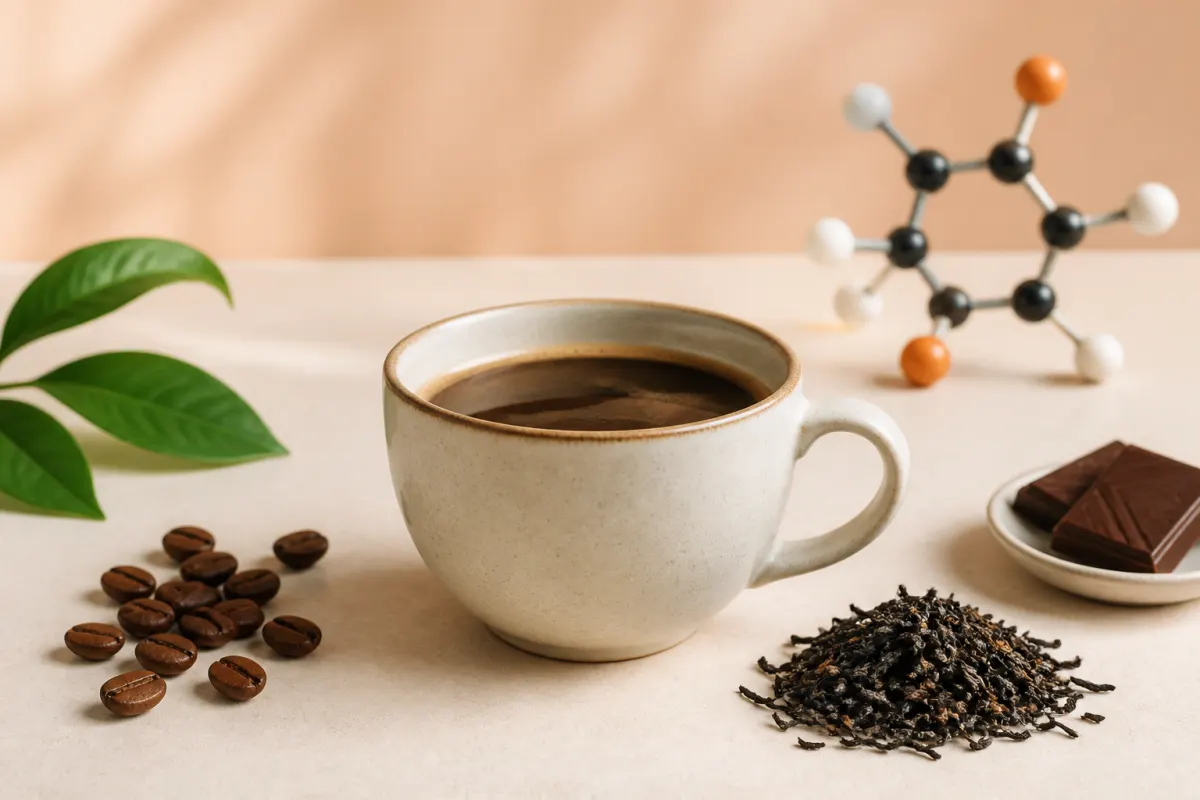
Caffeine is a naturally occurring methylxanthine alkaloid (C₈H₁₀N₄O₂) found in coffee beans, tea leaves, cacao, guarana and yerba mate. It is also added to cola, energy drinks, supplements and some medicines. It is absorbed quickly and crosses the blood–brain barrier. The average adult half-life is about five hours, although pregnancy, smoking, medicines, liver function and genetics can change it considerably.
2. How does it keep you awake?
Adenosine builds up while we are awake and promotes sleepiness. Caffeine resembles adenosine enough to occupy A₁ and A₂A receptors without delivering the same tiredness signal. It does not create energy; it temporarily turns down the perception of fatigue. It also indirectly affects dopamine and noradrenaline, influencing attention, mood, heart rate and blood pressure.
Adenosine builds up while we are awake and promotes sleepiness. Caffeine resembles adenosine enough to occupy A₁ and A₂A receptors without delivering the same tiredness signal. It does not create energy; it temporarily turns down the perception of fatigue. It also indirectly affects dopamine and noradrenaline, influencing attention, mood, heart rate and blood pressure.
3. Potential benefits
Alertness: may temporarily improve attention, reaction time and perceived fatigue.
Exercise: may modestly support endurance, strength or repeated-effort performance and reduce perceived exertion.
Medical uses: caffeine citrate is used clinically for apnea of prematurity, and caffeine appears in some combination pain medicines.
4. Possible risks and side effects
- Sleep: later sleep onset, less deep sleep or more awakenings—even when falling asleep feels easy.
- Anxiety: nervousness, tremor, restlessness or panic, especially in sensitive people.
- Heart and digestion: temporary blood-pressure rise, palpitations, reflux, nausea or increased bowel activity.
- Tolerance and withdrawal: regular use can blunt effects; abrupt stopping may cause headache, sleepiness and poor concentration.
- Concentrated powders and liquids can be dangerous because dosing errors may cause arrhythmias or seizures.
5. How much is too much?
The FDA says that for most healthy adults, 400 mg per day is an amount not generally associated with negative effects. EFSA similarly considers up to 400 mg from all sources per day and single doses up to 200 mg generally safe for healthy adults. These are population references, not targets or guarantees for every person.
EFSA and ACOG use 200 mg per day as a pregnancy reference. Children, adolescents, breastfeeding people, those with anxiety or arrhythmias, and people taking interacting medicines should seek individual advice.
6. Caffeine in common foods and drinks
These ranges are approximate. Brewing method, recipe and serving size can change the result substantially. Use the package label or a brand’s published data whenever available.
7. Using caffeine more wisely
- 01Count every source—not only coffee, but tea, cola, energy drinks, chocolate, supplements and medicines.
- 02Leave enough time before sleep. With a five-hour half-life, about half of a dose may remain five hours later.
- 03Avoid rapidly consuming a large dose; the same total taken quickly is more likely to cause tremor, anxiety or palpitations.
- 04Reduce gradually if intake is high to limit withdrawal headaches.
- 05Use your own response as the limit. If 100 mg disrupts sleep, your practical ceiling is below 400 mg.
KEY TAKEAWAY
Dose and timing matter more than a simple yes or no
For many healthy adults, moderate caffeine can be a useful tool for alertness or exercise. Its main trade-offs are sleep disruption, anxiety and dependence. Track total intake, learn your sensitivity and keep the last dose well away from bedtime.
Track daily intake →References
General education only; not a diagnosis or personalised medical advice. Consult a qualified professional about pregnancy, breastfeeding, medicines or health conditions.
← All articles