
TOLERANCE & WITHDRAWAL
Caffeine tolerance and withdrawal: why it feels weaker and how to cut back
Why does the same coffee stop feeling as effective—and why can quitting suddenly cause headache and fatigue? Understand tolerance, dependence and a gentler way to reduce caffeine.
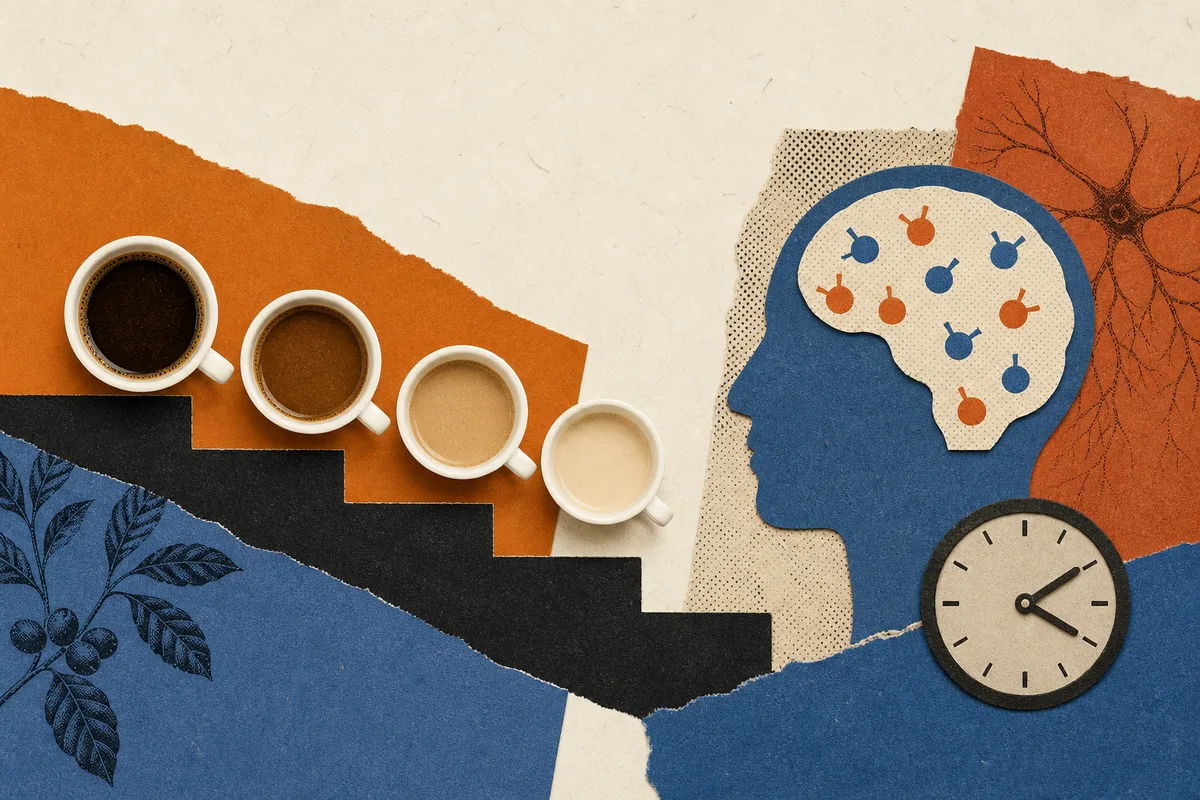
1. Tolerance, dependence and addiction are different
Tolerance is adaptation: a dose that once felt stimulating may produce a smaller subjective effect after repeated use. Physical dependence means a predictable set of symptoms can follow a sudden reduction. Either can occur in ordinary users and does not automatically mean uncontrolled or addictive use.
Caffeine mainly reduces sleepiness by blocking adenosine receptors. With regular exposure the nervous system adapts. A coffee that ‘does nothing’ may reflect tolerance, but sleep debt, stress, timing and an underestimated dose also matter.
2. Why the same dose can feel weaker
Tolerance does not develop equally to every effect. EFSA notes that tolerance to some blood-pressure and heart-rate responses can develop within days, while sleep disruption and individual adverse effects may remain. Not feeling a buzz does not mean caffeine has stopped affecting sleep.
Increasing the dose can briefly restore stimulation but also raises the chance of anxiety, palpitations, stomach discomfort and insomnia. First check total milligrams, timing and sleep rather than counting cups alone.
3. What happens when you stop suddenly
Typical withdrawal symptoms include headache, fatigue or drowsiness, reduced concentration, irritability, low mood and sometimes nausea or muscle aches. A clinical review in NCBI Bookshelf reports onset around 12–24 hours after the last dose, a peak around 20–51 hours and resolution for most people within 2–9 days.
Withdrawal is usually not dangerous, but it can impair work, study, driving and caregiving. If possible, do not schedule an abrupt stop immediately before an exam, long drive or demanding shift.
4. Who is more likely to notice withdrawal
Severity varies with usual dose, duration and sensitivity, although symptoms can occur after only one daily cup. Higher long-term intake, migraine, shift work, sleep loss and irregular use can make the experience more noticeable.
Coffee, tea, cola, energy drinks, chocolate, workout products and some pain or cold medicines can all contribute. Count every source before judging whether a taper is working.
5. How to reduce caffeine gradually
The FDA recommends cutting back gradually. Start with 3–7 days of honest tracking, then consider reducing roughly 25%–50% every few days, slowing down if symptoms interfere with daily life. This is a flexible clinical strategy, not a race to zero.
Swap one serving for half-caf or decaf, choose a smaller size, reduce espresso shots and remove late-day caffeine first. Keep sleep, meals and hydration steady, and avoid quietly replacing the removed dose with an untracked drink.
A flexible 7–14 day framework
- Track every source and time for several days.
- Remove the latest serving first to protect sleep.
- Reduce by about one quarter every few days; slow down if needed.
- Use half-caf, decaf or a smaller size instead of guessing.
- Review headache, energy, sleep and mood before the next step.
6. When symptoms need another explanation
Headache and severe fatigue have many causes. Fever, confusion, one-sided weakness, a sudden severe headache, persistent vomiting, chest pain or a marked rhythm disturbance should not be assumed to be simple withdrawal.
People who are pregnant, have migraine, anxiety, arrhythmia, chronic illness or take interacting medicines should discuss an individual target with a clinician. The goal may be better sleep or fewer symptoms—not necessarily permanent abstinence.
TAKEAWAY
You do not have to reduce caffeine all at once
Tolerance reflects adaptation; withdrawal is a temporary response to a rapid reduction. Measuring first and tapering gradually is usually easier to sustain than stopping abruptly.
References
- U.S. FDA — Spilling the Beans: How Much Caffeine Is Too Much?
- NCBI Bookshelf — Caffeine Withdrawal (StatPearls)
- EFSA — Scientific Opinion on the Safety of Caffeine
- NCBI Bookshelf — Caffeine: Central Nervous System and Behavioral Effects
General education only; not medical advice or a diagnosis.