
HYDRATION GUIDE
Does caffeine dehydrate you? Coffee, diuresis and hydration
Caffeine can briefly increase urine output, but more urination does not automatically mean net dehydration. For most healthy adults who regularly drink it, ordinary coffee and tea still contribute fluid.
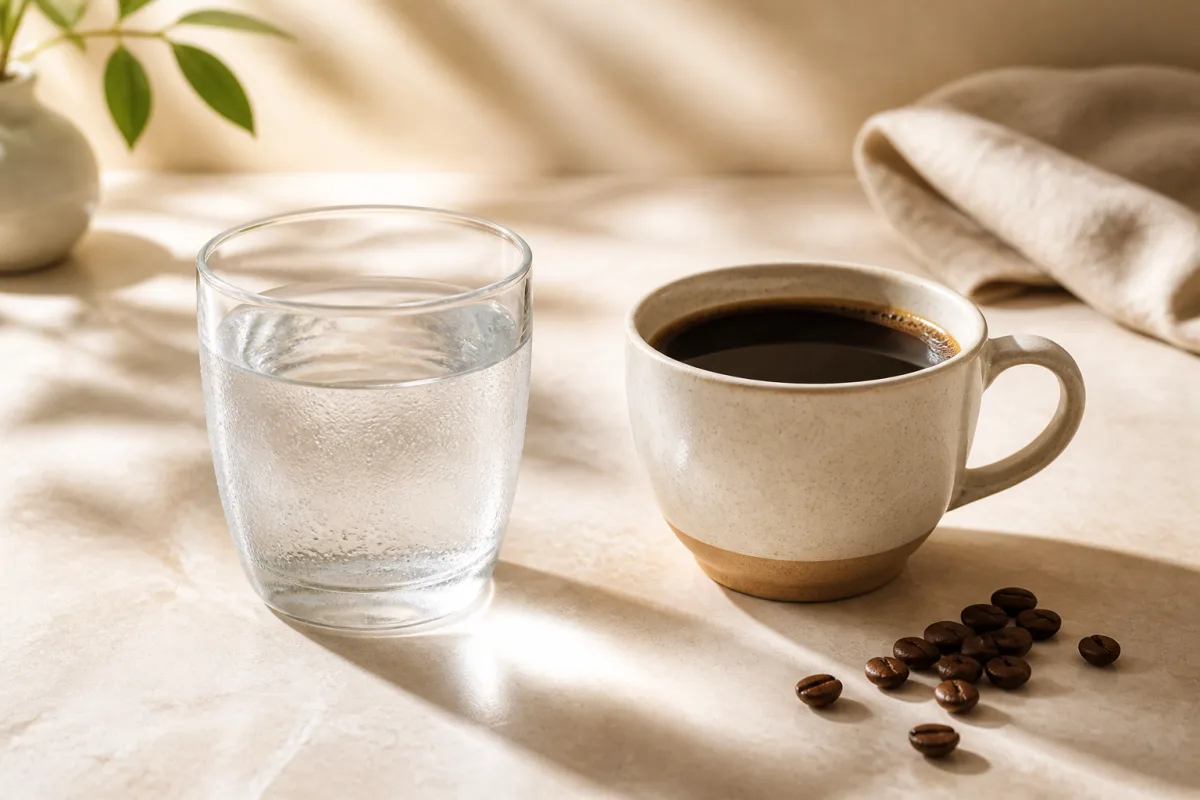
1. The short answer: coffee usually does not cancel out its water
Caffeine has a mild, short-lived diuretic effect, especially in people who rarely use it or after a larger dose. But coffee and tea contain substantial water. With ordinary, moderate intake, extra urine generally does not exceed all the fluid in the drink.
“Caffeine can increase urine output” and “every caffeinated drink dehydrates you” are different claims. Hydration reflects total fluids, food, sweat, temperature, illness and individual response across the day.
2. Why can caffeine increase urine output?
Caffeine blocks adenosine receptors and can briefly alter renal blood flow and sodium reabsorption. Dose, tolerance and usual intake all influence the effect.
Regular users develop tolerance to some effects. A high dose taken quickly may produce a stronger urge to urinate, particularly in a caffeine-naive person. Urinary frequency alone is not the same as reduced body water or clinical dehydration.
3. What does the evidence show?
A 2014 randomized crossover study in 50 habitual male coffee drinkers compared several days of coffee with equal water. Under the tested moderate-intake conditions, the researchers found no significant difference in overall hydration markers. This does not prove that every dose is harmless in every setting.
Sports-nutrition evidence also generally allows moderate caffeinated drinks to count toward daily fluid intake. Water remains the simplest sugar-free foundation; whether coffee suits you also depends on sleep, anxiety, palpitations, digestion and total caffeine.
4. Exercise, heat and heavy sweating
Caffeine before exercise may improve performance for some people, but coffee alone is not a hydration plan. Prolonged exercise, heat, humidity, altitude and heavy sweating increase fluid and electrolyte losses.
Use thirst alongside context and trends such as urine color, body-mass change, dizziness, unusual fatigue and performance. After prolonged heavy sweating, only drinking large volumes of plain water can also be problematic; endurance hydration may need electrolytes and an individualized plan.
5. Who should be more careful?
- Vomiting, diarrhea, fever or difficulty keeping fluids down.
- Hot outdoor work, long endurance exercise or unusually heavy sweating.
- Pregnancy, childhood, older age, or kidney and heart conditions that require fluid management.
- Diuretics or medicines that affect fluids, electrolytes or blood pressure.
- Persistent dizziness, confusion, very low urine output, abnormal heartbeat or severe weakness needs medical attention.
6. A practical coffee and hydration plan
- Use water as the foundation and count coffee or tea as part—not all—of your fluid intake.
- You do not need a rigid one-glass-of-water rule for every coffee. Adjust for thirst, weather, exercise and urine-color trends.
- Avoid large caffeine doses in a short period. The FDA cites 400 mg per day as an amount not generally associated with negative effects for most adults, not a target for everyone.
- Choose smaller servings or fewer shots; use decaf later in the day to protect sleep.
- Track timing, milligrams and how you feel instead of labeling all coffee as dehydrating.
TAKEAWAY
A diuretic effect is not the same as net dehydration
With ordinary intake, coffee and tea generally still provide fluid. Hydration depends on the balance of total intake and losses; exercise, heat, illness and high doses deserve more active planning.
References
- Killer et al. — No Evidence of Dehydration with Moderate Daily Coffee Intake (PLOS ONE, 2014)
- International Society of Sports Nutrition — Caffeine in exercise and performance
- Mayo Clinic — Caffeinated drinks and hydration
- FDA — Spilling the Beans: How Much Caffeine Is Too Much?
General education only, not diagnosis or medical advice. Fluid and caffeine needs vary with health, medicines, activity and environment.