
CAFFEINE SENSITIVITY
Why does coffee make me anxious, shaky or cause palpitations?
The alertness and jitters from caffeine can arise from the same stimulant effect. Learn the symptoms, dose differences, sensitivity factors and safer ways to respond.
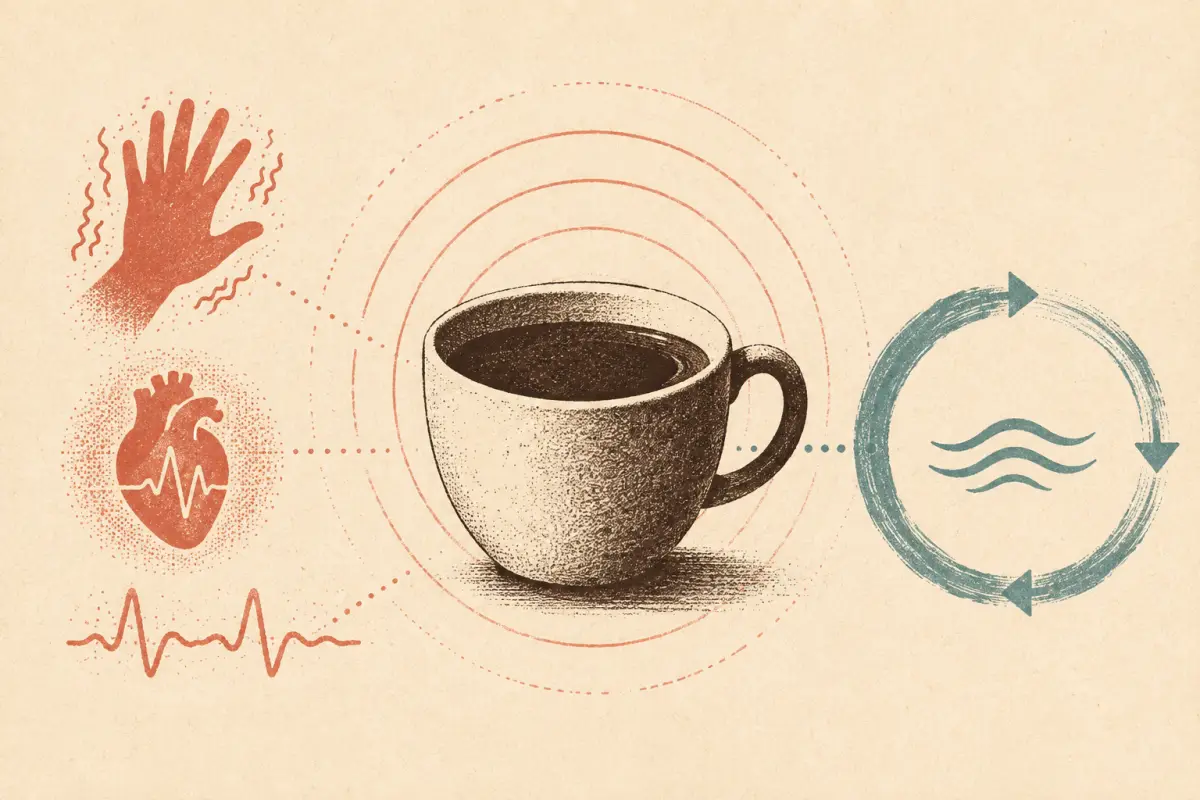
1. Why alertness and anxiety can overlap
Caffeine reduces sleep pressure mainly by blocking adenosine receptors and increasing arousal. At a suitable dose this may feel like focus; beyond an individual's tolerance, the same stimulation can feel like nervousness, restlessness or a pounding heartbeat.
A short caffeine response, worsening of existing anxiety and an anxiety disorder that needs assessment are not the same thing.
2. Symptoms that may be related to caffeine
FDA and MedlinePlus list possible effects including jitters, anxiety, tremor, insomnia, fast heart rate, palpitations, stomach upset and headache. Timing and duration vary with dose and metabolism.
Palpitations describe awareness of a fast, forceful, skipped or irregular heartbeat. They do not automatically mean a dangerous rhythm, but drinking coffee does not automatically make them harmless either.
3. Why the same cup affects people differently
Body size, genetics, habitual intake, poor sleep, an empty stomach, stress, nicotine and some medicines can change the response. A large dose may feel stronger in infrequent users or while cutting back.
People with panic disorder may be particularly sensitive. A systematic review found high caffeine challenge doses increased panic attacks and subjective anxiety in this group; most included doses were roughly 400–750 mg, so the findings should not be applied directly to a small coffee.
4. How much caffeine can trigger anxiety?
There is no milligram amount that guarantees zero anxiety for everyone. The FDA's 400 mg per day reference is an amount not generally associated with negative effects for most healthy adults—not a target or a guarantee for a single dose.
Evidence broadly suggests stronger anxiety responses at higher doses, especially above 400 mg, while sensitive people may react much lower. Finding your lowest effective dose is more useful than trying to match somebody else's limit.
5. What to do when you feel unwell
Stop adding caffeine and note the product, serving, estimated milligrams and time. Sit somewhere calm, slow your breathing, drink a reasonable amount of water and avoid stacking energy drinks, nicotine or other stimulants. Water does not instantly clear caffeine, though it can address concurrent low fluid intake.
After symptoms settle, review the total and timing. Try a smaller size, fewer shots, half-caf or decaf, and avoid rapidly drinking caffeine on an empty stomach. If habitual intake is high, gradual reduction can reduce withdrawal headaches.
6. When not to blame coffee alone
Seek prompt medical help for chest pain, fainting, marked trouble breathing, severe or persistent palpitations, or symptoms that are new or different. People with heart conditions, panic disorder, pregnancy or relevant medicines should ask a clinician about personal limits.
Caffeine may be one trigger, but palpitations and anxiety-like symptoms have many other causes. Tracking can reveal patterns; it cannot diagnose them.
TAKEAWAY
Your own threshold matters more than someone else's tolerance
Track the exact product, milligrams, timing and symptoms to find the lowest effective dose. Significant or unusual symptoms need professional assessment.
References
- U.S. FDA — Spilling the Beans: How Much Caffeine Is Too Much?
- MedlinePlus — Caffeine
- MedlinePlus — Heart palpitations
- Klevebrant & Frick — Caffeine, anxiety and panic attacks: systematic review
General health education only. This article does not diagnose or treat any condition and cannot replace medical advice.