
COFFEE VS ENERGY DRINKS
Coffee vs energy drinks: which has more caffeine?
The answer depends on the exact product, serving size and total container—not the category name. Compare reliable ranges and learn how to read the label.
1. The short answer: there is no fixed winner
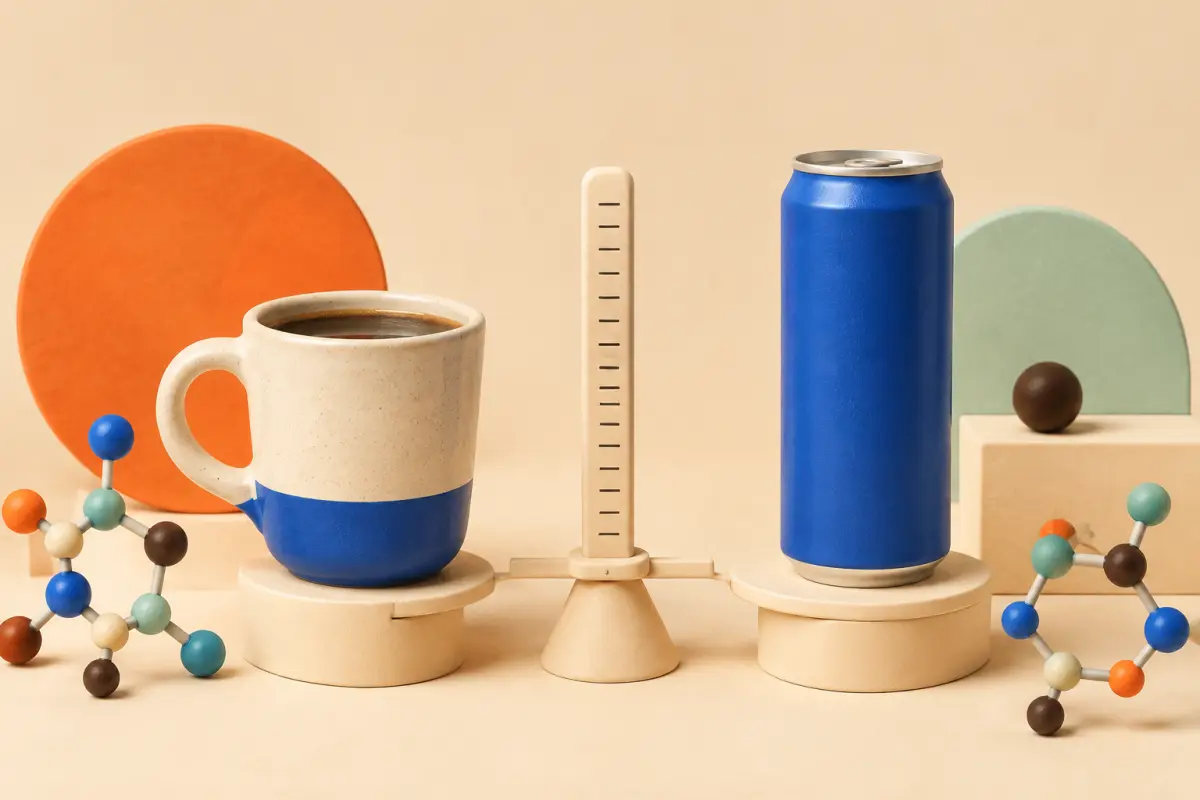
Coffee and energy-drink caffeine ranges overlap substantially. Bean type, brewing, shots and cup size change coffee; formula and can size change energy drinks.
Compare like with like: check caffeine per serving, then calculate the amount in the whole cup or container you actually drink.
2. How typical amounts compare
For 12 fl oz (about 355 ml), the FDA lists 113–247 mg for regular brewed non-specialty coffee and 41–246 mg for energy drinks. EFSA examples put a 200 ml filter coffee near 90 mg and a standard 250 ml energy drink near 80 mg.
These are guides, not guarantees. A large, strongly brewed coffee can exceed a small can, while a concentrated or large energy drink can exceed ordinary coffee.
3. Does the body distinguish natural and added caffeine?
The FDA says the body handles naturally occurring caffeine and added caffeine in the same way. Total dose, speed, sensitivity and timing matter more than the source label.
Coffee and energy drinks contain different additional ingredients, but those differences do not replace the need to count caffeine milligrams.
4. How to read an energy-drink label
Find the caffeine line and determine whether it is per serving or per container. If a can contains two servings and you finish it, multiply accordingly. Check ingredients for caffeine, coffee or tea extracts, and guarana.
Rules vary by market. If milligrams are unclear, use the manufacturer's official information rather than guessing from ingredient order.
5. What sugar, other ingredients and drinking speed mean
Sugared versions add sugar; sugar-free does not necessarily mean low caffeine. Cold, carbonated, portable drinks may also be consumed quickly, which can change how abruptly the stimulation feels.
The FDA cites 400 mg a day as an amount not generally associated with negative effects for most healthy adults, not a target for everyone. Medical experts advise against energy drinks for children and teens.
6. How to choose for your needs
Choose a product with a clear caffeine amount and a manageable container. Smaller coffee, fewer shots, half-caf or decaf can reduce intake; avoid stacking multiple energy drinks.
Track the exact product, volume, total milligrams and time. Reduce or move caffeine earlier if it causes jitters, anxiety or sleep disruption, and seek care for severe or persistent symptoms.
TAKEAWAY
The exact milligrams matter more than the category
Check both serving and container totals, compare equal volumes, and count every caffeine source in your day.
References
- U.S. FDA — Spilling the Beans: How Much Caffeine Is Too Much?
- EFSA — Caffeine
- Red Bull — Caffeine per can
General health education only; not a substitute for individual medical or nutrition advice.