
COFFEE & NUTRITION
Does coffee block iron absorption? Timing meals, deficiency and supplements
Coffee polyphenols can reduce absorption of nonheme iron from the same meal, but that does not mean everyone needs to quit coffee. Timing, vitamin C and the difference between food and iron tablets matter more.
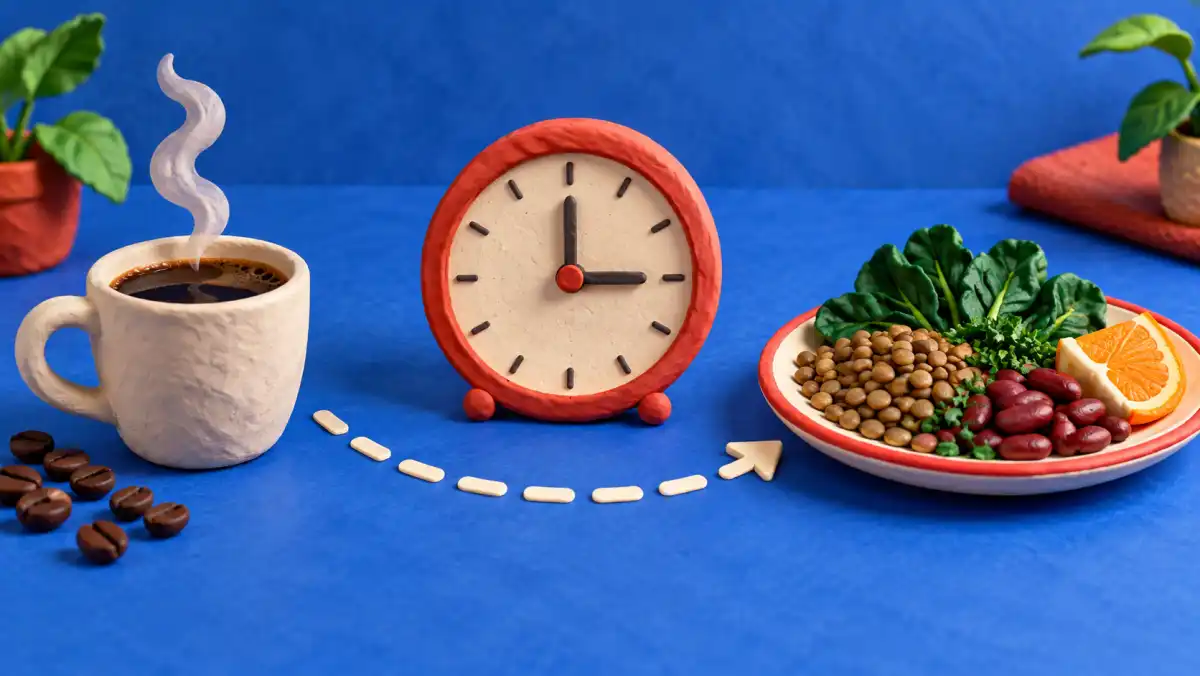
1. The short answer: yes, but context and timing matter
Coffee taken with a meal can meaningfully reduce immediate absorption of nonheme iron. In a classic human study, one cup reduced iron absorption from a hamburger meal by about 39%. That single-meal percentage cannot be translated directly into a person's total iron loss or a certainty of anemia.
For people with varied diets and normal iron stores, enhancers and inhibitors within individual meals are diluted by the whole diet. Timing matters more when iron deficiency is already present, requirements are higher, blood loss is ongoing, diets are mostly plant-based or iron tablets are being used.
2. What actually affects iron absorption?
The issue is often summarized as 'caffeine blocks iron,' but polyphenol compounds in coffee and tea are more important. They can bind or interact with nonheme iron in the digestive tract, making it less available for absorption. Decaf coffee can therefore still affect iron absorption.
The effect varies with coffee strength, polyphenol content, meal composition and timing. Beans, roast and brewing also vary, so no fixed reduction percentage applies to every cup.
3. Heme and nonheme iron are not the same
Heme iron comes mainly from meat, poultry and seafood. It is generally absorbed more efficiently and is less affected by other meal components. Nonheme iron is found in beans, nuts, vegetables, grains and fortified foods and is more sensitive to polyphenols and phytate.
That is why coffee beside beans, whole grains or iron-fortified cereal deserves more attention than its effect on meat iron. NIH estimates iron bioavailability at roughly 14%–18% from mixed diets and 5%–12% from vegetarian diets, although the body also adapts absorption to iron stores.
4. How far should coffee be from meals?
Direct evidence found inhibition when coffee was consumed with a meal or one hour afterward, while coffee one hour before did not show the same reduction in that early trial. The study was limited, so 60 minutes should not be treated as an exact biological boundary.
With normal iron stores, moving coffee between meals is a reasonable low-burden option. During iron-deficiency treatment or when maximizing an iron-rich meal matters, many clinical resources advise roughly one to two hours of separation; follow the advice specific to your care.
5. Coffee while taking iron supplements
Iron supplements deliver a treatment dose rather than an ordinary food amount. In a 2023 study of iron-deficient women, coffee reduced fractional absorption from an iron dose by 54% compared with water, and breakfast with coffee reduced it by 66%. This is not a reason to increase the dose yourself.
The UK NHS advises leaving two hours between ferrous sulfate and tea, coffee, dairy or eggs. Iron can interact with medicines and commonly causes gastrointestinal effects, so ask a clinician or pharmacist how to schedule it rather than changing a prescription on your own.
6. Can vitamin C cancel coffee's effect?
Vitamin C improves nonheme iron bioavailability. Pair plant iron with citrus, kiwi, peppers, tomatoes or broccoli. Meat, poultry and seafood can also enhance nonheme iron absorption in a mixed meal.
Vitamin C is not a guaranteed antidote to coffee. In the 2023 supplement study, breakfast with coffee still reduced absorption despite about 90 mg of vitamin C. When treating deficiency, separating coffee is more dependable than trying to compensate while taking both together.
7. Who should pay the most attention?
Prioritize timing if you have diagnosed iron deficiency or iron-deficiency anemia, take iron supplements, are pregnant or preparing for pregnancy with higher needs, have heavy menstrual bleeding, donate blood often, eat vegetarian or vegan, or have risks of malabsorption, gastrointestinal bleeding or inflammatory bowel disease.
Fatigue, breathlessness, palpitations, dizziness, headache, pallor or pica cannot be fixed simply by avoiding coffee at meals. Anemia has multiple causes and should be confirmed with appropriate testing rather than long-term self-treatment with iron.
8. A practical plan without giving up coffee
If your iron status is normal and your diet is balanced, you do not need to time every cup precisely. Put the main coffee between meals when convenient and include vitamin-C foods in plant-iron meals.
If you take iron, anchor the supplement first, keep coffee roughly two hours away when advised, then choose a coffee time you can sustain. Do not push all coffee into late afternoon to protect iron absorption and create a sleep problem instead.
TAKEAWAY
Keep coffee—move the cup that matters
With normal iron stores, dietary variety is usually enough. With deficiency, plant-based iron or supplements, separating coffee from the relevant meal or dose is a practical change that is easier to sustain than rebuilding the whole diet.
References
- NIH Office of Dietary Supplements — Iron fact sheet
- Morck, Lynch & Cook — Inhibition of food iron absorption by coffee
- von Siebenthal et al. — Iron supplements, coffee and timing
- NHS — About ferrous sulfate
- WHO EMRO — Promoting a healthy diet
General nutrition education only; not individualized advice for iron deficiency, anemia or medication use.